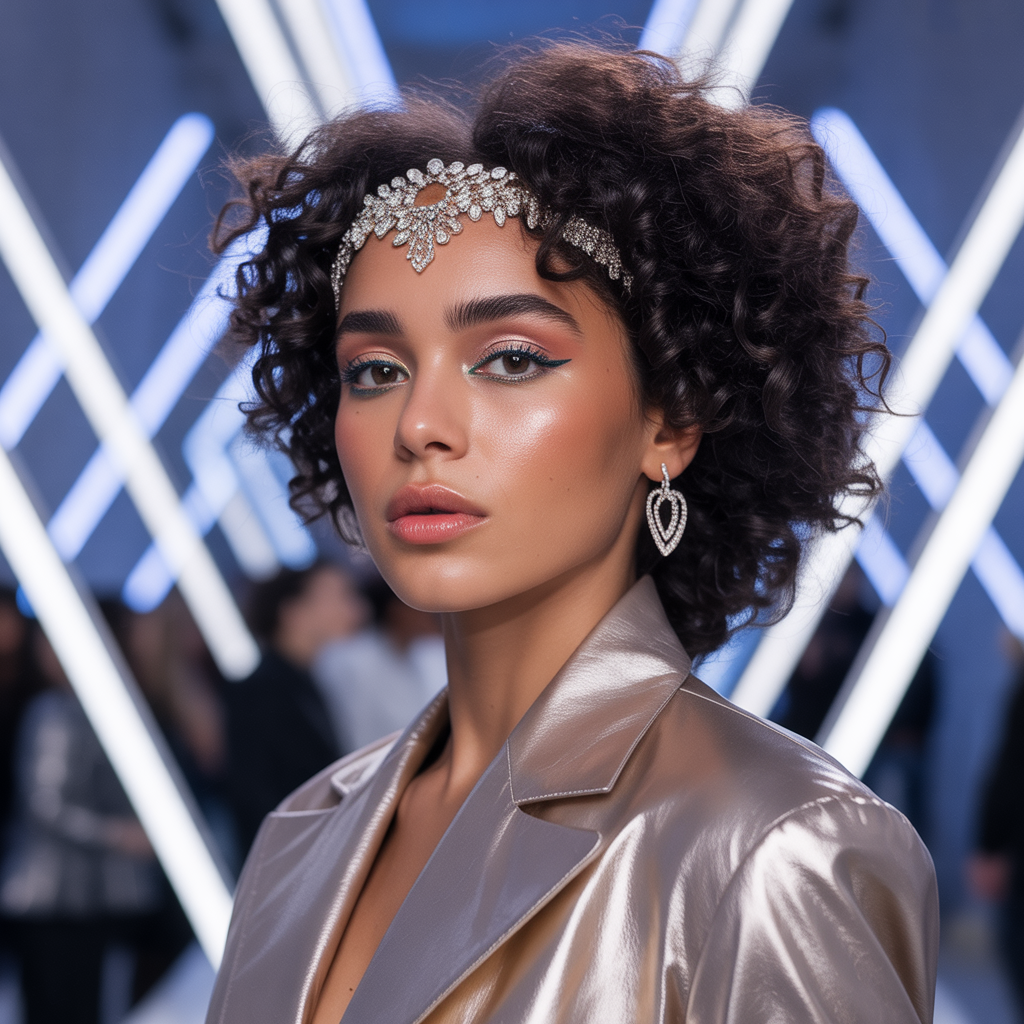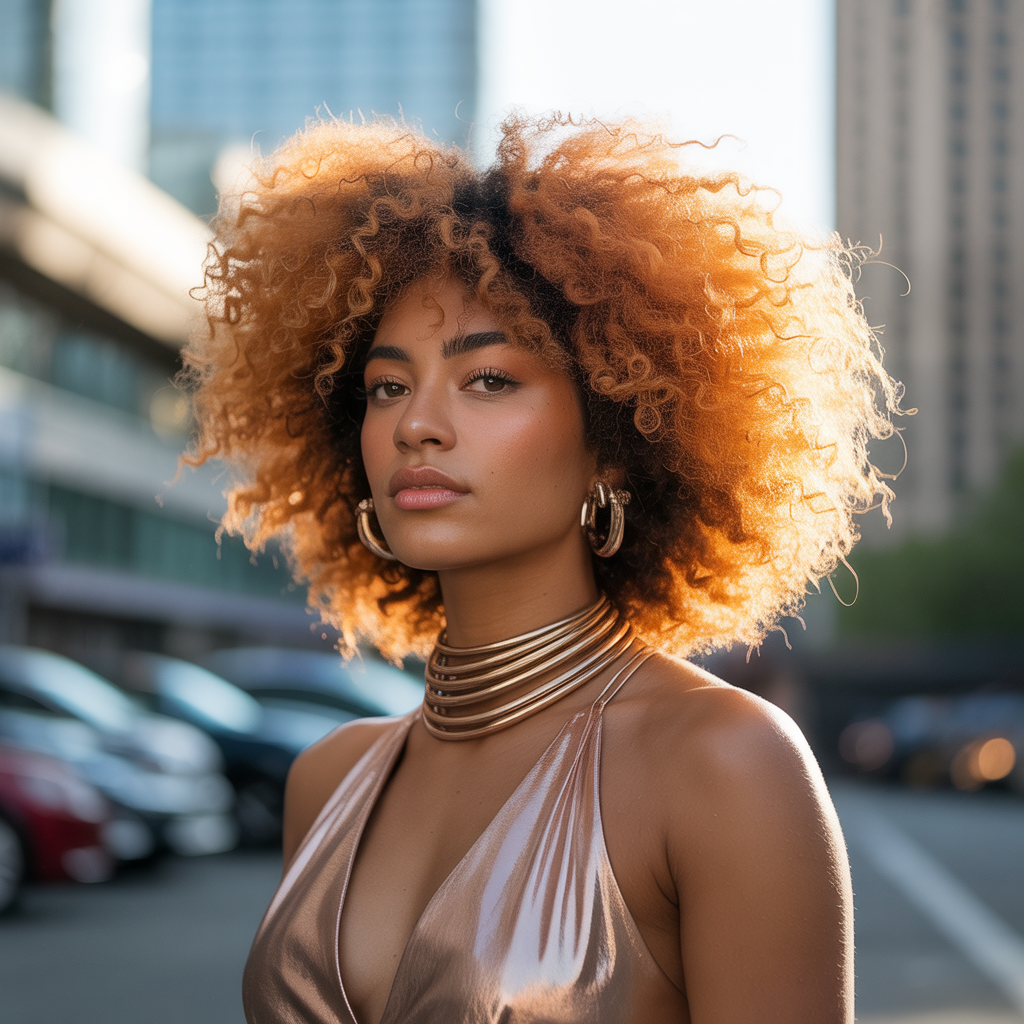
Women’s afro hair stays healthiest and looks its best with three habits: keep it moisturized (water first, then a leave-in, then an oil or butter to seal), handle it as little as possible, and protect it at night. Get those right and almost any style, from a tapered cut to a big twist-out or knotless braids, will last longer and break less. This guide walks through a realistic weekly routine, how to choose styles for your length and schedule, and how to pair your hair with makeup and outfits.

Understanding Afro-Textured Hair Before You Style It
Afro-textured hair grows in tight coils and zigzag patterns. Every bend in the strand is a point where the hair is a little weaker, and the natural oil from your scalp struggles to travel down a coiled strand the way it does on straight hair. That is why afro hair tends to feel dry at the ends even when the scalp is oily, and why it can snap if it is combed roughly while dry.
Two things are worth knowing about your own hair before buying products:
- Curl pattern. Many people use the 4A, 4B and 4C labels. 4A has visible S-shaped coils, 4B has a sharper zigzag, and 4C coils so tightly that the pattern is hard to see without stretching. Most heads mix two or three patterns, so treat the labels as a rough guide.
- Porosity. Low-porosity hair has a tightly closed cuticle: water beads on it and products sit on top. High-porosity hair drinks in water quickly and loses it just as fast. A simple test is to watch how long wet hair takes to dry. Very slow drying usually points to low porosity; very fast drying and frizz point to high porosity.
Low-porosity hair usually prefers lighter liquid leave-ins and gentle warmth during deep conditioning. High-porosity hair often does better with richer creams, butters and occasional protein treatments.

A Simple Weekly Care Routine for Afro Hair
You do not need a shelf of products. A consistent routine with a handful of basics will beat a complicated one you give up on after a fortnight.
1. Cleanse gently, every 7 to 14 days
- Pre-poo first: coat dry hair with a cheap conditioner or oil for 15 to 30 minutes so shampoo does not strip it.
- Wash in four to six sections, twisting each one loosely, to reduce tangles.
- Focus shampoo on the scalp with your fingertips, not nails, and let the suds rinse through the lengths.
- Use a sulfate-free shampoo for regular washes and a clarifying shampoo roughly once a month if you use gels or heavy butters.

2. Deep condition and detangle
- Apply a deep conditioner after every wash and leave it on for 20 to 30 minutes. A shower cap plus a warm towel helps low-porosity hair absorb it.
- Detangle only while the conditioner is in, working from ends to roots with fingers first, then a wide-tooth comb.
- If hair feels mushy, limp or overly stretchy, add a protein treatment every four to six weeks. If it feels straw-like and snaps easily, lean toward moisture.
3. Moisturize and seal with LOC or LCO
LOC stands for liquid, oil, cream; LCO swaps the last two. On damp hair, apply a water-based leave-in, then either an oil (jojoba, argan or grapeseed are light; castor is heavy) and a cream, or the cream first and oil last. Try each order for two weeks and keep whichever leaves your hair softer on day three. Refresh mid-week with a water-based spray and a small amount of oil on the ends.
4. Protect your edges and ends
- Avoid styles that pull at the hairline or cause bumps, soreness or tenderness. Repeated tension is the main cause of traction alopecia, which can become permanent.
- Trim a small amount every three to four months, or search-and-destroy single-strand knots as you find them.
- Keep direct heat occasional and always use a heat protectant. Frequent flat ironing can loosen your natural curl pattern over time.

5. Nighttime routine
- Sleep on a satin or silk pillowcase, or wear a satin bonnet or scarf. Cotton absorbs moisture and creates friction.
- Pineapple longer hair (a loose high ponytail with a scrunchie) to keep volume, or do four to eight chunky twists to stretch and preserve definition.
Afro Hairstyles for Women: Which Style Suits Your Week?
The best style is one that fits your length, your time and how much you want to handle your hair. Here is a quick comparison of popular options.
| Style | Best length | Typical time to do | How long it lasts | Manipulation level |
|---|---|---|---|---|
| Tapered cut / TWA | Short | 10 to 15 min daily | Cut refresh every 4 to 8 weeks | Low |
| Puff or high bun | Medium to long | 10 min | 1 to 3 days | Medium |
| Wash-and-go | Any | 30 to 60 min plus drying | 3 to 5 days | Low |
| Twist-out or braid-out | Medium to long | 1 to 2 hours | 4 to 7 days | Medium |
| Two-strand twists | Medium to long | 2 to 4 hours | 1 to 3 weeks | Low once installed |
| Box or knotless braids, faux locs | Any, with extensions | 4 to 8 hours (usually salon) | 4 to 8 weeks | Low once installed |
Short afros and tapered cuts
A tapered cut, shorter at the sides and nape and fuller on top, gives shape without much daily work. Spritz with water, apply a leave-in and a little curl cream, then shingle or finger-coil the top section. Ask your stylist to cut the hair curly rather than stretched so you see the true shape.
Medium-length afros, puffs and halo afros
Stretch hair overnight in twists or braids, then pick out the roots with an afro pick for a round halo shape. For a puff, smooth the hair back with a soft-bristle brush and a light gel, then secure with a stretchy fabric band rather than a tight elastic. A wide headband or scarf adds colour and hides a less-than-perfect hairline on day three.

Wash-and-go and twist-outs
For a wash-and-go, apply leave-in and gel to soaking-wet hair in small sections, rake it through, and let it air-dry or use a diffuser on low heat without touching it until fully dry. For a twist-out, twist damp, moisturized hair in medium sections, let it dry completely (overnight is ideal), then unravel with oiled fingertips and separate gently. Untwisting damp hair is the most common reason twist-outs turn frizzy.
Protective braids and extensions
Braids, twists and faux locs give your hair a break from daily styling. Keep installations to around six to eight weeks, choose knotless or lighter styles to reduce weight at the root, and take one to two weeks between installs to wash, deep condition and trim. Oil the scalp lightly and cleanse it with a diluted shampoo or witch hazel on a cotton pad. If you prefer added length or volume without braiding, our guide to hair extension options covers clip-ins, sew-ins and wigs.

Makeup and Skincare That Complement Afro Hair
Big, textured hair frames the face, so a balanced look usually means defined features and healthy-looking skin rather than heavy coverage.
- Skin first. A lightweight moisturizer and daily broad-spectrum SPF matter for every skin tone. Ingredients such as niacinamide and vitamin C are popular for evening out tone and dark marks, though results vary and patch-testing is sensible.
- Watch the hairline. Heavy oils and butters can migrate onto the forehead. Apply styling products before skincare, and wipe the hairline before foundation.
- Brows. Groomed, defined brows hold their own against volume.
- Lips. Berry, brick red and deep plum shades create contrast; brown-toned nudes give an understated finish. If you are unsure which shades suit your undertone, our light summer color palette guide explains how undertones guide colour choices.

Outfit Ideas That Work With Afro Styles
- Casual: high-waisted jeans, a fitted tee and hoops or sculptural earrings that echo the round shape of an afro or puff.
- Office: a tailored blazer over a soft blouse. Open collars and V-necks keep the neckline clear so voluminous hair does not crowd the shoulders. For more ideas, see our guide to the dress and blazer outfit.
- Evening: off-the-shoulder, one-shoulder or halter necklines let the hair act as the main accessory. Our dress neck guide explains which necklines suit which looks.
- Accessories: headwraps, silk scarves and wide padded headbands either contain the hair on busy days or add a pop of pattern.

Common Mistakes to Avoid
- Combing dry hair from the roots down, which snaps strands at the bends.
- Relying on oil alone to “moisturize”. Oil seals in water; it does not replace it.
- Leaving braids in too long, which leads to matting at the roots and breakage when they come out.
- Changing products every week. Give a new routine four to six weeks before judging it.
- Ignoring scalp discomfort. Persistent itching, flaking, bald patches or thinning at the edges are worth raising with a dermatologist or trichologist.
Frequently asked questions
How often should women with afro hair wash their hair?
Most women with afro hair wash every one to two weeks. Wash more often if you work out heavily or have an oily or itchy scalp, and use a co-wash or water rinse between shampoos if your hair feels dry.
What products are best for defining afro curls?
A water-based leave-in conditioner, a curl cream or custard, and a soft-to-medium hold gel cover most needs. Ingredients such as glycerin, aloe and shea butter help with softness and definition. Clarify monthly if you use heavy products.
Can I wear protective styles all the time?
You can wear them often, but give your hair a break of one to two weeks between installs, keep each install to around six to eight weeks, and avoid tight styles that pull the hairline, since repeated tension can cause traction alopecia.
What is the LOC method?
LOC means applying a liquid (water or water-based leave-in), then an oil, then a cream to damp hair. It layers hydration and seals it in. Some people prefer LCO, with the cream before the oil.
How do I keep my afro style overnight?
Pineapple the hair or put it in a few large twists, then cover it with a satin bonnet or scarf, or sleep on a satin pillowcase. In the morning, lightly mist, fluff the roots with a pick and shape.

Make Your Texture Your Signature
Afro hair rewards patience more than products. Pick one wash day, one moisturizing method and one or two go-to styles, give them a month, and adjust based on how your hair feels. Once the basics are steady, experimenting with colour, shape and accessories becomes the fun part.