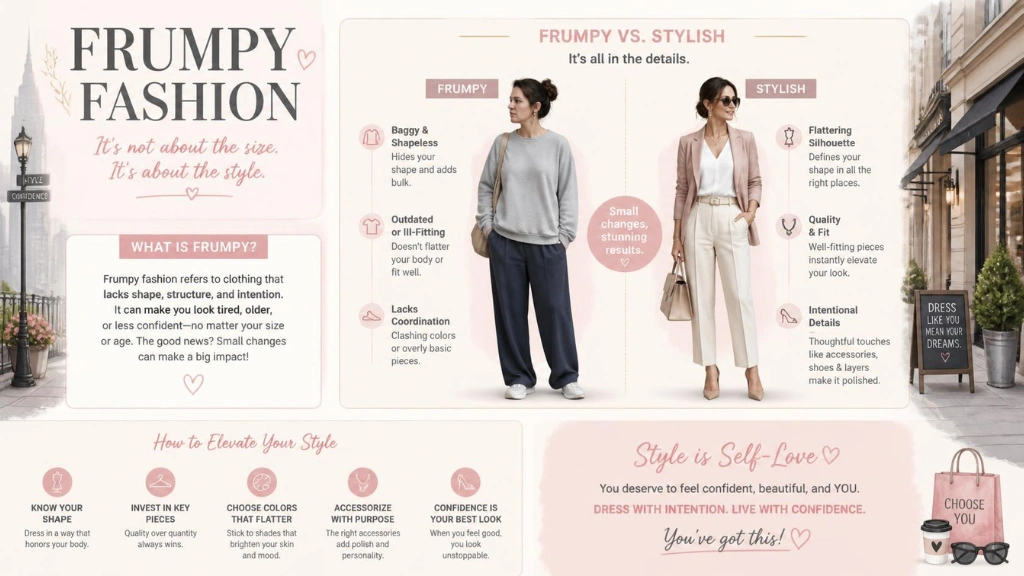
Searchers often use the word when an outfit feels dated, disconnected, or unfinished. In fashion, frumpy is a disapproving label, not an objective diagnosis. You can refresh a look without changing your body, dressing younger, or giving up comfort.
| Key point | What it means for your style |
| Tone | The word is usually disapproving and subjective. |
| Common fashion sense | It often suggests clothes look dated, dull, or unintentionally styled. |
| Not automatically included | Loose, modest, vintage, simple, neutral, or comfortable clothing. |
| Useful things to assess | Garment care, fit, coordination, color, texture, footwear, and accessories. |
| Better goal | Make the outfit feel chosen and coherent for you. |
Frumpy is a disapproving adjective for clothing or appearance that seems dull, dated, or lacking style. In fashion, the label is subjective and should describe an outfit impression, not a person’s worth. Clothes can feel more intentional through fit, care, color, texture, footwear, or accessories without becoming tighter or trendier.
Key takeaways
- The label describes a style impression, not a body type or age group.
- Oversized, modest, vintage, or simple clothes can look completely intentional.
- Small changes often work better than replacing an entire wardrobe.
- Fit means the garment works as designed, not that it must fit closely.
- Color repetition, garment care, shoes, and accessories can quickly clarify an outfit.
What Does Frumpy Mean in Fashion?
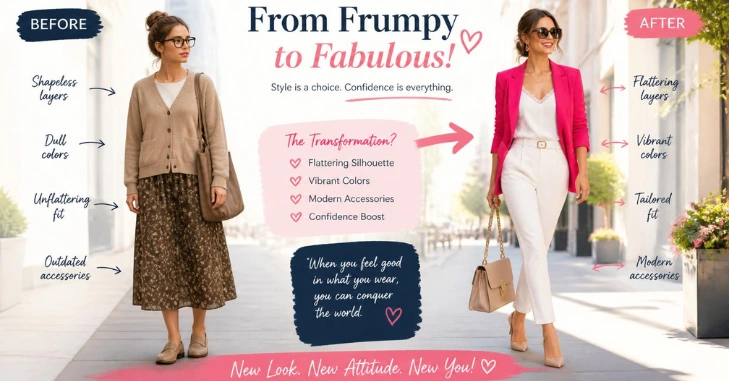
Oxford Learner’s Dictionaries defines the term as not fashionable or attractive. Collins Dictionary similarly describes clothes that seem dull or not fashionable. Those definitions explain common usage, but they do not create a universal style standard.
Frumpy in Fashion changes across places, communities, subcultures, and personal tastes. A piece that one person calls dated may be another person’s favorite vintage find. A better styling question is whether the outfit communicates the look you intended.
That shift keeps the focus on clothes rather than judging the person wearing them. Maybe a hem is dragging, a knit is pilled, or several colors feel disconnected. Those are editable styling details, and none require criticism of someone’s body.
For a broader system, see Defashionz’s outfit styling guide. It covers color, texture, layering, and repeatable outfit formulas. Treat each formula as an option that can support your preferences.
Why an Outfit Can Feel Dated or Unfinished
Garment condition can change an ‘s impressionoutfit’s impression before styling choices even matter. Wrinkles, pilling, stretched ribbing, loose threads, or scuffed shoes can make pieces look neglected. Cleaning, steaming, mending, or de-pilling may restore what you already own.
Fit can matter, but it doesn’t mean tight, narrow, or body-conscious. It means the garment sits and moves the way its design requires. Sleeve length, shoulder placement, hems, closures, and intentional ease are more useful checkpoints.
Coordination also affects whether separate pieces read as one outfit. Repeating a color, texture, metal, or style cue can create a clear visual connection. The repeated element can be subtle, such as brown shoes echoing a brown bag.
Context matters because clothes communicate through combinations r, not isolated rules. A prairie dress, wide-leg suit, or oversized knit can look purposeful when surrounding choices support that direction. Personal style becomes clearer when several details point toward the same idea.
Defashionz’s outfit aesthetic guide can help you identify those repeated preferences. Notice which colors, silhouettes, textures, and details keep showing up in outfits you save. Those patterns can become your own styling vocabulary.
8 Ways to Refresh an Outfit Without Replacing Your Closet
Start with the outfit you already planned to wear. Change one or two details before buying anything new. This keeps the process practical and protects the parts of your style you already like.
- Refresh the fabric first. Steam wrinkles, remove lint, de-pill knits, and trim loose threads. Clean fabric often makes the biggest immediate difference.
- Check functional fit points. Look at hems, cuffs, shoulder seams, closures, and areas meant to drape. Tailoring can correct distracting fit issues without changing your preferred silhouette.
- Choose one visual anchor. Let one piece lead the outfit, such as a bright jacket or patterned skirt. Keep nearby choices quieter if you want that item to stand out.
- Repeat one element. Echo a color, metal, texture, or shape in two places. Repetition can connect separate pieces without making them match exactly.
- Mix ease and structure on purpose. Keep oversized pieces if you love them. Add structure through a crisp cuff, defined shoe, sturdy bag, or clean outer layer.
- Restyle before you replace. Try rolling sleeves, opening a collar, changing a layer, or switching the order of pieces. Skip any styling move that feels unlike you.
- Let footwear support the outfit’s message. Sneakers can make tailoring casual, while loafers can sharpen relaxed denim. Boots can add weight and texture to softer fabrics.
- Edit accessories deliberately. Add one focal accessory when an outfit feels plain. Remove one when several details compete for attention.
Simple wardrobes can also feel distinctive when the choices connect. Defashionz explains how to dress simply using repeatable basics and outfit formulas. Use the parts that suit your routine, climate, and taste.
What Does Not Automatically Make an Outfit Dated
Oversized clothing isn’t automatically sloppy, and modest clothing isn’t automatically old-fashioned. Vintage pieces are not automatically costumes, and neutral outfits are not automatically boring. Each can look intentional when color, fabric, condition, and styling support the idea.
Rules that insist every loose item must pair with a close-fitting item are optional formulas, not laws. A fully relaxed silhouette can look coherent when line, texture, and color connect. A maximalist outfit can work through repeated colors or motifs instead.
Trend participation is optional too. You can reference a current color, shoe, or accessory without rebuilding your closet around every seasonal shift. You can also ignore trends and use consistent personal signatures instead.
If you want current references, browse Defashionz’s fresh outfit trends. Use trends as a menu rather than a deadline. Keep what supports your style and leave the rest.
Three Styling Examples Using the Same Clothes
Relaxed Cardigan, T-Shirt, and Jeans
Suppose the outfit feels unfinished even though every piece is comfortable. De-pill the cardigan, press the tee, and clean the sneakers before changing anything else. Then repeat one color between the shoes, bag, or jewelry for a clearer connection.
You can keep the cardigan loose if that is the shape you prefer. Pushing the sleeves slightly can expose the tee cuff and create another visible layer. Leaving the sleeves down works just as well if you prefer a softer line.
Loose Button-Down and Wide-Leg Pants
A loose shirt with wide-leg pants can be intentional from head to toe. Press the shirt, adjust the hem, and choose deliberate footwear. A structured tote or compact crossbody can add contrast without changing the silhouette.
You do not need to tuck the shirt or define the waist. Those are styling options, not requirements. An open collar, rolled cuff, or repeated color can create the same sense of direction.
Simple Midi Dress
A plain midi dress gives you room to change the mood through smaller pieces. Sneakers and a denim jacket can make it casual, while boots and a knit layer add texture. A scarf, bag, or jewelry can introduce a color you repeat elsewhere.
The dress does not need extra shaping to feel finished. Focus on fabric condition, hem placement, footwear, and the level of detail you want. The result should feel consistent with your own style goal.
A 60-Second Outfit Check
Use this check when an outfit feels off, not every time you get dressed. Personal style does not need constant correction or outside approval. The goal is to identify one editable detail, make the change, and move on.
- Is anything wrinkled, pilled, stained, stretched, or visibly worn?
- Do the hems, sleeves, closures, and intended drape work correctly?
- Is there one color, texture, metal, or shape that could repeat?
- Do the shoes support the mood you want for the outfit?
- Is one accessory missing, or are several details competing?
- Does the finished look still feel like something you would choose?
If the answer to the last question is no, the problem may be the styling direction rather than the clothes. Save a few outfits you genuinely like and compare their repeated elements. That exercise can reveal a clearer personal formula than generic fashion rules.
Make the Word Useful, Not Personal
Style advice works best when it gives you choices, not rules about your body. Focus on garment condition, fit, function, color, texture, proportion, and personal intent. Those areas offer practical changes while leaving comfort and self-expression intact.
Start with an outfit you already wear and test one change from this guide. Keep the change if it makes the look feel more like you. For more ideas, continue with Defashionz’s outfit styling and personal-aesthetic guides.
Frequently Asked Questions
What does frumpy mean in fashion?
It usually describes clothing or styling that feels dated, dull, or lacks a clear fashion direction. The term carries a negative tone, so use it carefully when describing other people. It is more useful as a prompt to inspect specific outfit details.
Is oversized clothing automatically outdated?
No, oversized clothing can fit minimalist, streetwear, workwear, romantic, or other aesthetics. The key question is whether the volume feels intentional within the complete outfit. Fabric, color, footwear, and layering can support that intention.
Do I need to buy new clothes to make an outfit feel current?
Usually not, because garment care and restyling can change the result quickly. Start with steaming, mending, shoe care, different layers, or a new accessory combination. Replace an item only when it no longer serves your needs.
How can I make a simple outfit feel more intentional?
Choose one connection that repeats across the look. That could be a shared color, matching metal, repeated texture, or consistent level of formality. Small connections can make basic pieces feel related without adding more clothing.