
Have you ever stood in front of your closet, pulled out a gorgeous fabric, and wished you could sketch the perfect dress to bring it to life? Whether you’re dreaming up a capsule wardrobe or planning a show-stopping evening gown, dress design sketches are the bridge between inspiration and the clothes you actually wear. In this post I’ll show you how to make fashion illustration approachable, share beauty and makeup pairings, and give real-world fashion tips so your sketches become wardrobe winners.
Why dress design sketches matter for your style
Dress design sketches (also called fashion illustrations or fashion sketches) help you visualize proportions, silhouettes, and fabric behavior before any sewing or shopping begins. They’re especially useful for:
- Refining outfit ideas from a moodboard or Pinterest board.
- Communicating with a tailor or dressmaker using clear visuals.
- Planning a cohesive wardrobe — from day dresses to evening gowns.
- Experimenting with color palettes and fabric textures without waste.
Even if you’re not aiming to be a professional fashion designer, learning to sketch dresses improves your personal style decisions and makes custom pieces more attainable.
Dress design sketches: From concept to closet
This is the step-by-step process I use when translating a vibe into a wearable dress — with tips any non-designer can follow.
Tools you’ll need
- Sketchbook or fashion croquis templates (search for fashion illustration templates).
- Pencils (HB for outlines, 2B for shading), fineliners, and a soft eraser.
- Alcohol markers or watercolor pencils for colorways; fabric swatches for texture reference.
- Tracing paper to refine silhouettes without starting from scratch.
- Optional: a lightbox app or simple lightbox to trace croquis.
Step-by-step sketching process
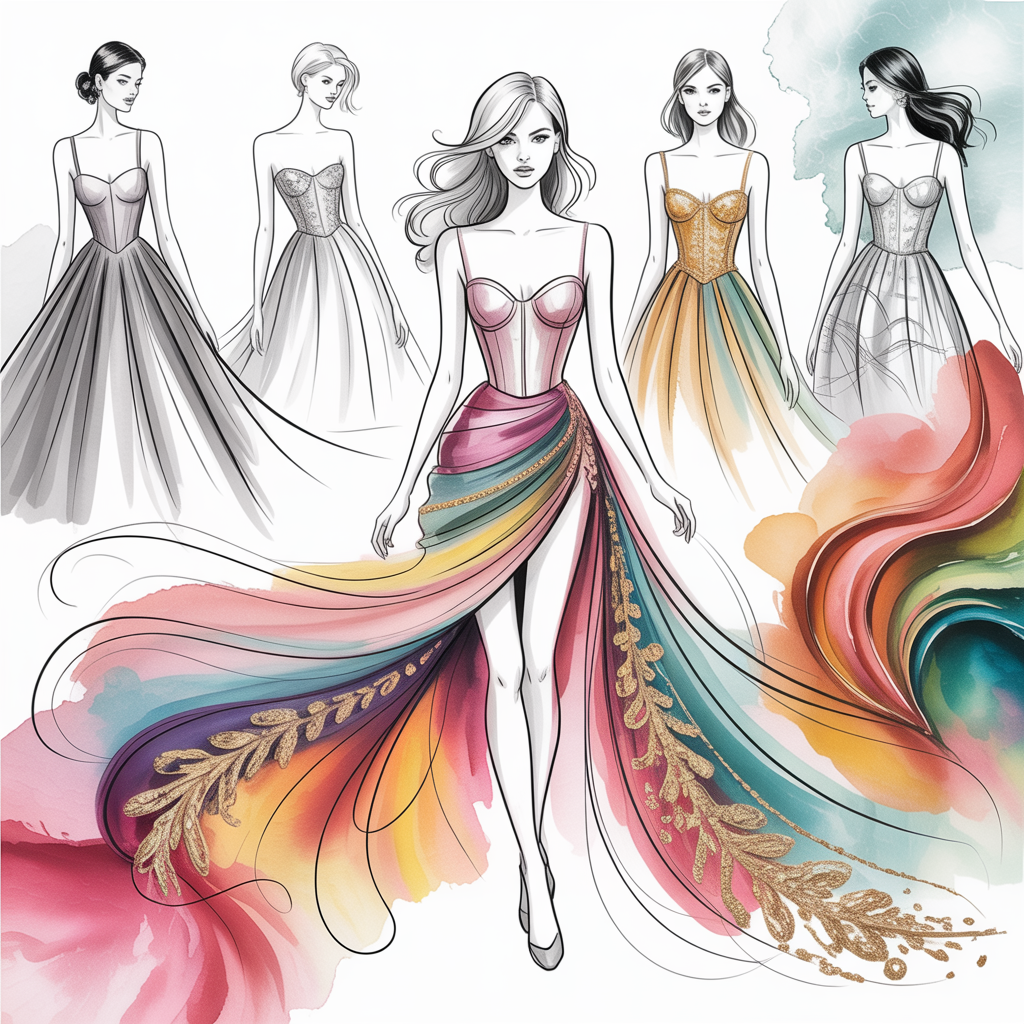
- Start with a croquis: a simple fashion figure helps keep proportions consistent.
- Block in the silhouette: A-line, sheath, empire waist, mermaid — focus on the overall shape.
- Add details: necklines, sleeve types, pleats, seams, pockets, and closures.
- Consider fabric weight: sketch drape lines for silk vs. structure for denim or neoprene.
- Finalize with color and texture: use swatches or marker blends to visualize prints or metallic fabrics.
- Annotate: note fabrics, trims, and measurements for real-world execution.
Design variations and long-tail ideas
To get the most from your sketchbook, experiment with long-tail concepts like “bridal dress design sketches,” “evening gown sketches,” or “casual summer dress sketching ideas.” Try reworking one silhouette into multiple styles — a midi into a maxi, or a fitted bodice into a wrap dress — to expand your wardrobe without starting from zero.
Beauty & makeup to match your dress design sketches
Your dress isn’t complete without the right beauty look. When planning outfits from your sketches, think of makeup, hair, and skincare as finishing touches that amplify your vision.
Quick skincare routine for a flawless base
- Cleanse with a gentle gel or cream cleanser to remove impurities without stripping natural oils.
- Use a hydrating toner or mist to balance skin pH and add an instant glow.
- Apply a lightweight serum with Vitamin C or niacinamide for brightness.
- Finish with SPF daily and a hydrating moisturizer for healthy, camera-ready skin.
For event looks or photos of your creations, a hydrating face mask the night before and a dewy primer before makeup will make your skin look luminous in sketches and photos.
Makeup looks that complement common dress sketches
- Minimalist slip dress: fresh skin, soft bronzer, nude gloss, and glowy highlighter.
- Bold evening gown: classic red lip, winged liner, and a matte contour to define features.
- Romantic lace or floral dress: rose-toned blush, soft eyelids with a wash of shimmer, and airy waved hair.
- Structured, tailored dress: polished bun, bold brows, and statement earring choices.
For more seasonal palettes and step-by-step looks, check out our makeup trends page.
Outfit combinations & real-world fashion advice
Sketches are only as useful as how you implement them. Here are practical tips to turn your drawings into daily outfits:
- Mix textures: Pair a chiffon dress with leather boots for edge; a knitted cardigan with a silk slip makes day-to-night dressing effortless.
- Layer strategically: Add a tailored blazer over a dress sketch for office-friendly silhouettes.
- Invest in tailoring: Small adjustments to hem lengths and waist seams elevate even inexpensive purchases.
- Build a capsule: Use a series of sketches to create five versatile dresses that interchange with outerwear and shoes.
Need a plan for seasonal pieces? Our fashion guides include capsule templates and style-checklists you can sketch into your wardrobe planning.
Quick tips to make your fashion sketches look professional
- Keep line weight varied: thicker lines for outer edges, lighter lines for fabric folds.
- Use a limited color palette per page to keep looks cohesive.
- Annotate fabrics and trims to avoid confusion later.
- Practice hands and feet separately to keep your croquis clean — many designers omit detailed hands for speed.
Styling for photos and runway-ready looks
If you plan to photograph your designs or take them to a portfolio review, think about overall presentation: consistent lighting, clean backdrops, and matching accessories that echo the sketch notes. Show both front and back views, and include close-ups of interesting details like embroidery or sleeve construction.
Frequently Asked Questions
1. How do I start dress design sketches if I can’t draw?
Begin with fashion croquis templates and tracing techniques. Trace basic silhouettes to learn proportion, then gradually add details. Using tracing paper and reference photos makes the process fast and less intimidating.
2. What tools should I use for professional-looking sketches?
Start simple: HB and 2B pencils, a fineliner for outlines, and a couple of markers or watercolor pencils for colorways. As you improve, invest in a quality sketchbook, a set of alcohol markers, and fabric swatches to render textures accurately.
3. Can dress design sketches help when shopping or working with a tailor?
Absolutely. A clear sketch with annotations (fabric type, seam lines, closures) communicates your vision precisely, reducing miscommunications and speeding up the tailoring process. Bring swatches and reference photos for best results.
Conclusion — make your wardrobe dreams tangible with dress design sketches
Dress design sketches are a joyful, practical way to plan outfits, refine your aesthetic, and communicate with makers. Whether you’re sketching bridal dress design sketches, experimenting with evening gown sketches, or creating everyday pieces, these illustrations turn fleeting ideas into tangible fashion. Ready to sketch your next look? Grab a croquis, jot down fabric ideas, and try a quick beauty pairing from our skincare tips and makeup trends pages. Share your first sketches or questions in the comments — I’d love to see what you create!