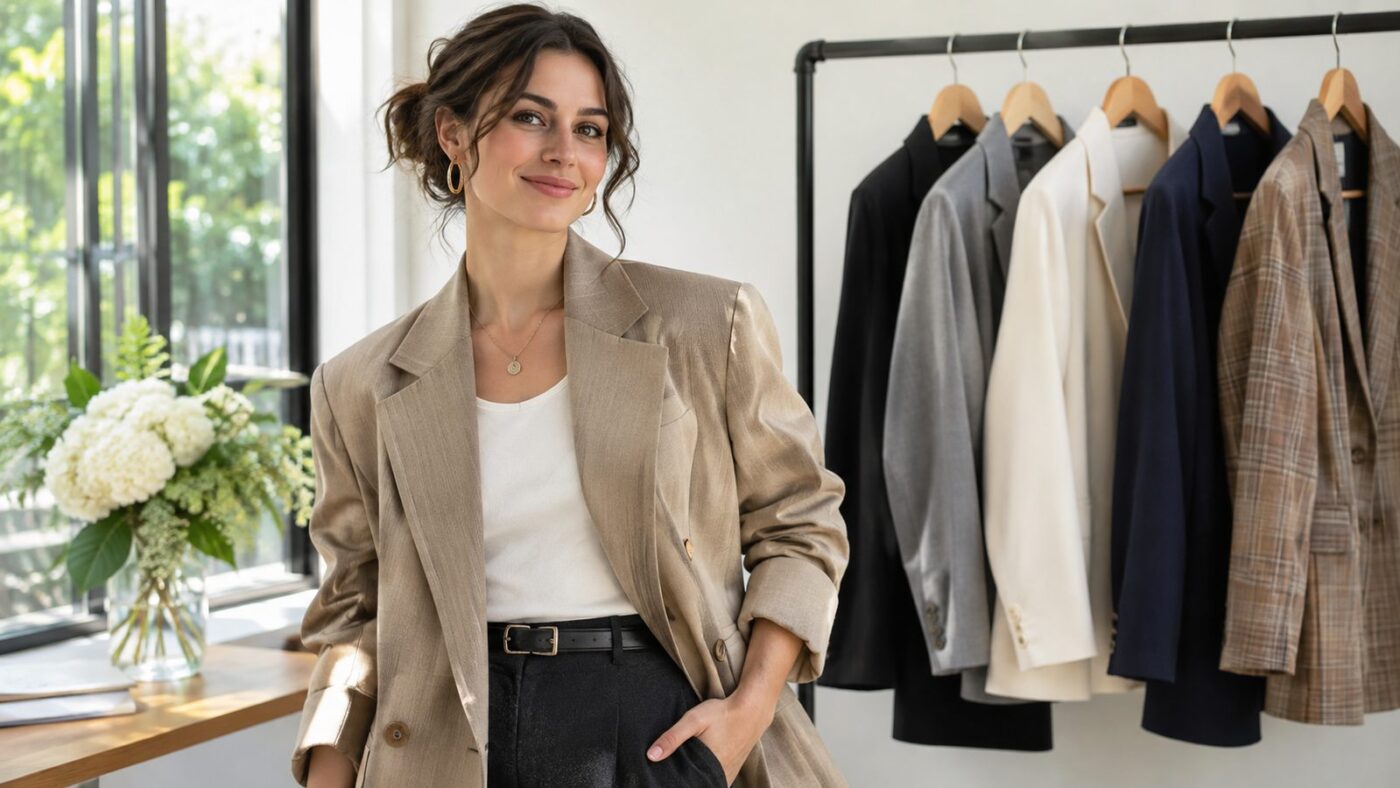
A well-chosen blazer can make everyday outfits look polished without feeling too formal. If you’re shopping for blazers women can wear to work, weekends, dinners, and special occasions, start with the cut, fit, and fabric. The right choice should complement your proportions, suit your lifestyle, and work with clothes you already own. This buyer’s guide explains the main styles, how to check the fit, which fabrics suit each season, and what to wear with different designs. You’ll also find practical sizing, tailoring, and care advice to help you make a confident purchase.
Women’s Blazer Buying Guide: Key Details at a Glance
| Buying consideration | What to look for |
|---|---|
| First blazer | Single-breasted, lightly tailored design |
| Starter colors | Black, navy, camel, and gray |
| Shoulder fit | Seams should meet your natural shoulder edge |
| Sleeve length | Ends around the wrist bone |
| Button closure | Closes without pulling or visible strain |
| Summer fabrics | Linen, cotton, and lightweight blends |
| Cooler-weather fabrics | Wool blends, tweed, and heavier suiting |
| Easy alterations | Sleeve length and waist shaping |
| Best everyday length | Hip-length for versatile styling |
| Care | Follow the garment label and use suitable hangers |
Quick Takeaways: Choosing the Right Blazer
- Buy for shoulder fit first because shoulder alterations are difficult.
- Choose single-breasted tailoring for a versatile first purchase.
- Pick breathable fabrics for warm weather and wool blends for cooler months.
- Check sleeve length, button tension, and back comfort before buying.
- Start with neutral colors before adding checks, stripes, or seasonal shades.
- Use tailoring to refine the waist and sleeves when the basic fit is correct.
1. Understand the Different Types of Women’s Blazers
Blazers come in different cuts, lengths, and fabrics. Understanding these differences helps you choose a design that matches your wardrobe and the occasions you dress for.
Single-Breasted Blazers
A single-breasted design has one column of buttons and a straightforward front opening. It’s an easy starting point because it works with office trousers, jeans, skirts, and dresses. Choose a lightly tailored version if you want something polished without a restrictive feel.
Double-Breasted Blazers
Double-breasted styles feature overlapping front panels and two columns of buttons. Their structured appearance creates a stronger, more formal silhouette. They work particularly well with tailored trousers, wide-leg pants, and coordinated outfits.
Oversized and Boyfriend Blazers
Oversized designs have extra room through the body and often feature relaxed shoulders. Boyfriend blazers typically borrow a longer, slightly slouchy silhouette from traditional menswear. Wear them with fitted tops, straight-leg jeans, leggings, or slim trousers to balance the extra volume.
Cropped Blazers
Cropped designs finish around the waist or above the hips. They pair naturally with high-waisted jeans, tailored trousers, and skirts. They’re worth considering if longer jackets overwhelm your proportions or hide your waistline.
Longline Blazers
Longline styles extend below the hips, often toward the upper or mid-thigh. They create a longer visual line and provide additional coverage. Pair them with slim trousers, fitted dresses, or streamlined denim for balanced proportions.
Fitted and Tailored Blazers
These designs follow the body’s shape and often include waist shaping or structured shoulders. They’re useful for professional outfits, interviews, and occasions that call for neat tailoring. Look for enough room through the bust and upper arms to move comfortably.
Fabric-Based Styles
- Linen blazers: Lightweight and breathable, making them suitable for warm weather. Their natural creasing gives outfits a relaxed finish.
- Tweed blazers: Textured and structured, making them useful for fall, winter, and polished daytime outfits.
- Velvet blazers: Rich in texture and suited to evening dinners, celebrations, and special events.
Collarless blazers offer a cleaner neckline and a softer alternative to traditional lapels. Explore that specific silhouette separately if you want a more detailed style comparison.
2. Blazer Types and Their Best Occasions
Use this comparison when deciding which silhouette deserves a place in your wardrobe.
| Blazer type | Main appearance | Best occasions |
|---|---|---|
| Single-breasted | Classic and versatile | Work, everyday, interviews |
| Double-breasted | Structured and formal | Meetings, dinners, events |
| Oversized | Relaxed and roomy | Weekends, casual outings |
| Boyfriend | Long and slightly slouchy | Brunch, travel, casual dinners |
| Cropped | Short and modern | Parties, casual wear, high-waist outfits |
| Longline | Extended and streamlined | Work, smart casual, evening |
| Fitted | Defined and polished | Office, presentations, formal occasions |
| Linen | Light and breathable | Summer, holidays, daytime events |
| Tweed | Textured and classic | Fall, winter, work, daytime events |
| Velvet | Soft-looking and dressy | Date nights, celebrations, evening events |
3. How Should a Women’s Blazer Fit?
A good fit matters more than the size printed on the label. A blazer should follow your natural shape while leaving enough room for comfortable movement. Use these checks when trying on a new design:
Check the Shoulders First
The shoulder seam should sit at the edge of your natural shoulder. It shouldn’t extend too far down your arm or pull inward toward your neck. Poor shoulder fit is difficult and often expensive to correct.
Check the Sleeves
Sleeves should finish around your wrist bone when your arms rest naturally. They shouldn’t cover your hands or expose too much forearm unless the design intentionally features shorter sleeves. Check that you can bend your elbows without feeling restricted.
Test the Button Closure
Fasten the intended button while standing naturally. The front should close without creating an X-shaped wrinkle or pulling across your bust or stomach. If the fabric strains, try another size or a different cut.
Look at the Length
The right length depends on your height, proportions, and preferred styling. Hip-length designs are versatile, while cropped cuts highlight high-waisted outfits. Longline versions provide extra coverage and create a more elongated silhouette.
Check Movement and Comfort
Sit down, reach forward, and cross your arms during the fitting. The back shouldn’t bunch excessively, and the armholes shouldn’t restrict movement. Also check that the lapels lie flat and the collar sits comfortably against your neck.
4. Choose Blazer Fabrics According to the Season
Fabric affects comfort, appearance, drape, and maintenance. Think about your local climate and how frequently you’ll wear the garment before choosing a material.
| Season | Recommended fabrics | Why they work |
|---|---|---|
| Spring | Cotton, lightweight wool, linen blends | Comfortable layering and moderate warmth |
| Summer | Linen, cotton, lightweight blends | Breathability and reduced weight |
| Fall | Tweed, wool blends, structured cotton | Added warmth and texture |
| Winter | Wool blends, heavier tweed, lined fabrics | Better coverage and insulation |
For warmer US climates, lightweight linen and cotton designs are practical choices. If you live somewhere with cold winters, consider wool blends and fully lined options. Pay attention to the lining as well as the outer fabric. A full lining can help a jacket slide over other garments, while an unlined design often feels lighter. Always check the care instructions before purchasing because different blends require different maintenance.
5. Which Blazer Colors Should You Buy First?
Color determines how easily a new piece works with your existing clothes. Starting with versatile shades makes it easier to create multiple outfits without building an entirely new wardrobe.
Black
A black blazer works with office trousers, denim, dresses, and evening outfits. It offers a clean contrast with white, cream, gray, and brighter colors. Choose a tailored design if you want a dependable option for different occasions.
Navy
Navy offers a softer alternative to black while retaining a professional appearance. It pairs particularly well with white, pale blue, beige, gray, and denim. A navy single-breasted blazer is a useful choice for everyday workwear.
Camel
Camel adds warmth to neutral outfits and works well with cream, white, chocolate brown, and black. It’s especially useful for smart-casual styling and transitional seasons. Pair it with dark denim for an easy weekend combination.
Gray
Gray provides a balanced neutral that works across professional and casual wardrobes. Charcoal looks particularly polished with black trousers, while lighter gray pairs nicely with cream and pastel shades. Choose the shade that complements your existing clothes.
Patterns and Statement Colors
Once you have neutral options, consider checks, pinstripes, subtle plaids, or seasonal colors. Patterned designs work best when the rest of your outfit remains relatively simple. A printed blazer over a plain top and solid trousers creates a balanced look.
6. Sizing and Tailoring Tips Before You Buy
US clothing sizes aren’t perfectly consistent across retailers or garment styles. Always check the individual size chart instead of relying entirely on your usual number. Measure your bust, waist, hips, and shoulder width before ordering online. Compare your measurements with the garment specifications, especially if the blazer has a structured design or limited stretch. If you’re between sizes, consider the fabric, intended fit, and whether you’ll wear thicker layers underneath. Prioritize these areas when assessing alterations:
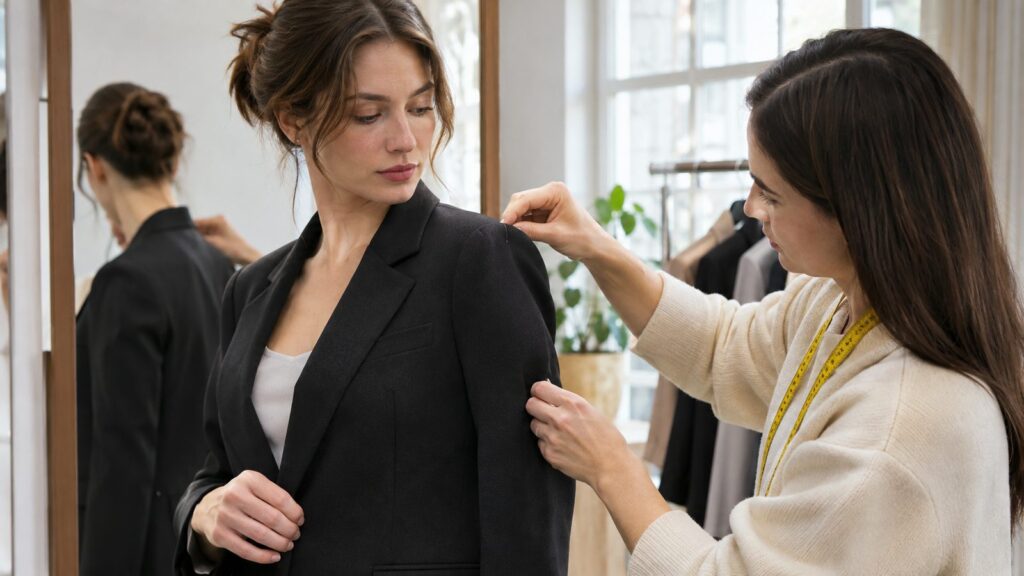
- Shoulders: Choose the closest natural fit because restructuring shoulders is difficult.
- Sleeves: Shortening sleeves is usually a straightforward alteration.
- Waist: Taking in excess fabric can create a more defined silhouette.
- Hem: Adjusting the length may improve proportions, depending on the design.
- Bust: Avoid buying a jacket that strains across the chest, even if the waist fits.
Try the blazer with the type of top you’ll normally wear underneath. A jacket that fits over a thin camisole might feel restrictive over a sweater. Buying for the shoulders and overall comfort usually gives you a better starting point than buying for the waist alone.
7. Blazer Fit Tips for Petite, Plus-Size, and Tall Women
Your proportions can influence which length, sleeve design, and cut feels most comfortable. These suggestions are starting points rather than strict rules.
Petite Women
Petite shoppers can consider cropped or hip-length designs that don’t overwhelm their frame. Narrower lapels and moderate shoulder structure can help maintain balanced proportions. Check sleeve length carefully because standard sizing may extend beyond your wrist.
Plus-Size Women
Look for comfortable room through the bust, upper arms, waist, and hips. Single-breasted designs with gentle waist shaping can create a defined silhouette without excessive structure. Stretch blends and thoughtful seam placement may improve comfort, while the button closure should remain smooth.
Tall Women
Tall shoppers may prefer longer body lengths and sleeves that reach the wrist comfortably. Longline silhouettes can complement taller proportions, although hip-length styles remain versatile. Check garment measurements because standard sleeve and body lengths may feel short.
8. How to Style a Blazer for Different Occasions
A single design can work across several settings when you change the layers, shoes, and accessories. The easiest approach is to match the blazer’s structure to the formality of the occasion.
Work and Office Outfits
Pair a tailored navy, black, or gray blazer with straight-leg trousers and a crisp button-down shirt. Loafers, low heels, and a structured bag complete a professional outfit. For more outfit combinations, explore our guide to business casual outfits.
Weekend and Casual Looks
Wear an oversized or boyfriend blazer over a simple white tee and straight-leg jeans. Add sneakers, loafers, or ankle boots for comfortable everyday styling. You can also use ideas from our everyday outfit styling guide to create combinations with existing wardrobe pieces.
Date Night
A fitted black blazer or velvet design pairs well with a satin camisole and tailored trousers. For a softer look, layer it over a slip dress and add heeled sandals. Statement earrings and a small evening bag complete the outfit.
Weddings and Special Events
Choose a fitted, double-breasted, or velvet design that complements your dress or coordinated outfit. A cropped blazer can work particularly well with a midi dress, while a tailored longline version adds coverage. Keep accessories balanced so the overall look remains polished. For more outfit combinations, see our guide to styling a dress with a blazer.
Choosing What to Wear Underneath
Your base layer affects how comfortably the jacket sits and how formal the outfit appears. Button-down shirts work for professional settings, while fine knits and camisoles suit more relaxed or dressy occasions. Find more options in our guide to what to wear inside a blazer.
9. How to Care for Your Blazer
Proper care helps preserve the fabric, shape, and overall appearance of your garment. Always follow the manufacturer’s care label because cleaning requirements vary between materials and construction methods. Use these simple habits:
- Hang your blazer on a broad, shaped hanger to support the shoulders.
- Air it out after wearing instead of placing it straight into a crowded closet.
- Remove surface dust with a suitable clothing brush.
- Spot-clean small marks when the fabric allows it.
- Use a steamer carefully to release wrinkles and restore a neat appearance.
- Follow dry-cleaning instructions for structured or delicate garments.
- Store seasonal pieces in breathable garment covers.
- Keep wool and tweed designs clean before placing them into long-term storage.
Avoid frequent washing unless the care label permits it. Excessive cleaning can affect fabric texture, color, and structure. Good storage also helps prevent unnecessary creasing and shoulder distortion.
10. Quick Checklist: Buying Your First Blazer
Before purchasing your first piece, run through this practical checklist. It helps you focus on fit and versatility instead of choosing a design based only on appearance.
- Choose a single-breasted or lightly tailored silhouette.
- Start with black, navy, camel, or gray.
- Check that shoulder seams meet your natural shoulder edge.
- Make sure sleeves finish around your wrist bone.
- Fasten the button and check for pulling across the front.
- Sit, reach, and move your arms to test comfort.
- Check the length against your height and preferred outfits.
- Choose a fabric suited to your local climate.
- Review the garment’s care label and lining.
- Consider whether minor sleeve or waist alterations are needed.
Frequently Asked Questions About Women’s Blazers
Which blazer style is best for a first purchase?
A single-breasted blazer in black, navy, camel, or gray is a practical starting point. It works with trousers, jeans, skirts, and dresses, making it suitable for different occasions. Choose a lightly tailored fit for flexibility.
Should a women’s blazer be tight or loose?
A blazer should feel comfortable while following its intended silhouette. Fitted designs should skim the body, while oversized styles should have deliberate extra room. Neither should restrict your arms or create unwanted pulling across the front.
How long should a women’s blazer be?
A classic design often finishes around the hips, while cropped versions end near the waist. Longline styles extend farther down the thighs. Choose based on your proportions, wardrobe, and preferred silhouette.
Can a blazer be tailored after purchase?
Yes, many blazers can be adjusted through the sleeves, waist, and sometimes the hem. Shoulder alterations are more complicated because they involve the garment’s internal structure. Choose a blazer with a good shoulder fit before considering other adjustments.
Which fabrics are best for summer blazers?
Linen, cotton, and lightweight blends are suitable choices for warm weather. These fabrics generally feel lighter and allow more comfortable layering. Look for a construction that suits your climate and preferred level of structure.
Are oversized blazers suitable for petite women?
Yes, petite women can wear oversized designs by paying attention to proportions. A moderate length, balanced shoulder structure, and streamlined outfit underneath help prevent excessive volume. Cropped oversized styles are another option.
How do you style a blazer casually?
Pair a relaxed blazer with a basic tee, straight-leg jeans, and sneakers or loafers. Keep the top relatively streamlined to balance the jacket’s volume. A crossbody bag and simple jewelry finish the look.
How do you maintain a velvet or tweed blazer?
Follow the specific care label because these fabrics can require specialist cleaning. Store them on shaped hangers and avoid crushing the fabric in crowded spaces. Use gentle steaming only when the material and care instructions allow it.
Find a Blazer That Works With Your Wardrobe
The right blazer should fit comfortably, suit your lifestyle, and complement the outfits you already enjoy wearing. Start with a versatile neutral design, then explore different lengths, textures, and silhouettes as your wardrobe develops. Focus on shoulder fit, comfortable movement, and suitable fabric before committing to a particular style. Use the buying checklist when comparing options, and consider minor tailoring if the main fit is already correct. With a thoughtful choice, one well-fitting piece can serve your workwear, weekend outfits, and special-event wardrobe for years. —